

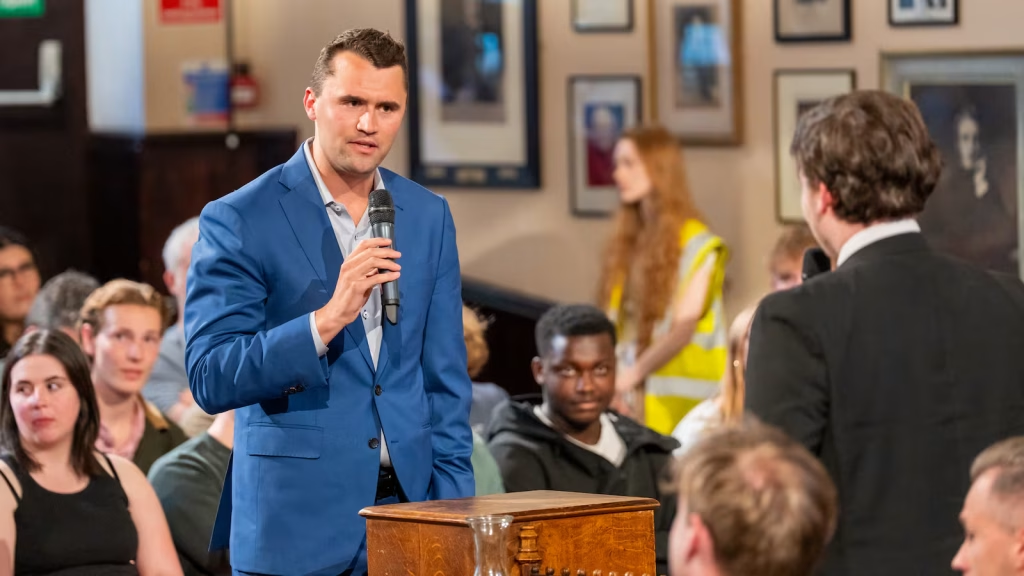
Following the tragic death of Charlie Kirk, the long-running animated series South Park has found itself at the center of heated controversy. Kirk, a well-known conservative commentator and founder of Turning Point USA, was shot and killed while participating in a debate at Utah Valley University.
Authorities have yet to apprehend the suspect, and investigations are ongoing as law enforcement agencies continue piecing together the circumstances of the attack. The violent incident shocked both Kirk’s supporters and critics, sending ripples through the political and cultural landscape in the United States.
At the same time, South Park was airing an episode that included Kirk as one of its satirical targets. Known for its provocative humor and unapologetic style, the show has a long history of lampooning political figures across the spectrum, but this particular moment struck many as especially contentious.
The episode, part of the show’s twenty-seventh season and titled Got a Nut, poked fun at Kirk alongside other prominent MAGA-aligned personalities, including former President Donald Trump. For many fans, the timing of the episode could not have been more controversial.
Almost immediately after the episode aired, critics took to social media to demand accountability. Some longtime viewers expressed disappointment, insisting that while they had enjoyed South Park for years, this instance crossed a line. One fan wrote that they had always defended the show’s irreverence, but in light of recent events, they now believed it was time for the program to end. For these critics, the juxtaposition of satire and real-life tragedy was too difficult to stomach.
Other voices online went further, suggesting that the show had helped create a culture of hostility that contributed, at least indirectly, to Kirk’s death. This argument sparked intense debate. Supporters of South Park pushed back against the idea, pointing out that the series has lampooned countless figures from politics, religion, entertainment, and beyond, often in ways far more aggressive than what Kirk experienced in this episode. In their eyes, to blame a cartoon for an act of violence was to misunderstand both the nature of satire and the real causes of tragedy.
Interestingly, Kirk himself had shown no resentment toward his portrayal on the program. Prior to the airing of the episode, he had already seen promotional clips mocking him and publicly admitted that he found them humorous. Rather than taking offense, Kirk said that being the subject of satire was a sign of relevance—that he had achieved enough cultural impact to merit inclusion in the show’s crosshairs. He noted that satire, no matter how biting, should be taken with a sense of humor, not outrage.
After the episode officially aired, Kirk doubled down on this perspective. He remarked that although many people might object to how he was portrayed, he considered it a mark of success to be parodied by South Park. In his view, it showed that his platform and message had reached deep into the cultural mainstream. He also urged conservatives to grow “thicker skin,” arguing that jokes or caricatures do not weaken ideas. Instead, he believed that the willingness to laugh off criticism was a strength, not a weakness.
Supporters of the show echoed Kirk’s sentiments, defending South Park’s right to satirize any public figure. They reminded critics that for over two decades, the program has spared no one—religious leaders, celebrities, politicians, and corporations alike have all been subject to its crude humor. To many of its defenders, the backlash to the Kirk episode seemed like an overreaction, fueled less by the quality of the satire and more by the heightened emotions surrounding his sudden death.
Still, the grief and shock of Kirk’s killing intensified the reaction for some audiences. For those who lost a figure they admired, the idea of mocking him—even unintentionally so close to his passing—felt cruel. They argued that even if the show’s creators had no responsibility for the tragedy, they could have shown more sensitivity. Others strongly disagreed, warning that holding a comedy show responsible for real-world violence creates dangerous precedent and undermines freedom of expression.

Former President Donald Trump and several other political leaders condemned the shooting, confirming Kirk’s death and calling for swift justice. As authorities continue the manhunt for the suspect, the overlap of Kirk’s real-life demise with his satirical depiction has sparked broader cultural debates. The conversation now extends beyond South Park, touching on questions about the boundaries of satire, the importance of timing, and how society should treat the legacies of public figures immediately after their deaths.
While some viewers are calling for South Park to be cancelled over the episode, others are pointing to Kirk’s own reaction as an example of how to handle mockery with dignity. By laughing at himself and framing the parody as proof of cultural influence, he demonstrated resilience in the face of ridicule. That attitude, some argue, stands in stark contrast to the outrage shown by others in his defense.
Ultimately, the uproar reveals deeper cultural tensions. Should satirists alter their work out of sensitivity during tragic times? Or is the very essence of satire its refusal to pull punches, even when the subject is freshly deceased? South Park has never been a show that caters to delicate sensibilities, and its polarizing nature remains intact. Whether one sees its treatment of Kirk as disrespectful or as part of its longstanding tradition of irreverence, the episode highlights the uneasy intersection of comedy, politics, and real-world loss.
