

The assassination of Igor Kirillov, a high-ranking Russian general overseeing the country’s chemical weapons program, has sent shockwaves across geopolitical spheres. Kirillov, infamous for his involvement in Russia’s chemical warfare strategies, was killed in a targeted explosion in Moscow, an attack Ukraine has claimed responsibility for.
Kirillov’s legacy includes his role in deploying banned chemical weapons during Russia’s invasion of Ukraine, leading to thousands of incidents of chemical poisoning among Ukrainian soldiers. His actions drew international condemnation, with the UK imposing sanctions against him as part of broader measures targeting those perpetuating war crimes.
Kirillov headed the Russian military’s chemical, biological, and radiological defense troops, playing a key role in the strategy that allegedly sought to suppress Ukrainian forces through illegal means. Ukraine’s defense intelligence announced the assassination, labeling it a consequence of Kirillov’s culpability in crimes against humanity.

They highlighted over 4,800 incidents of chemical weapon use attributed to him during the war, marking him as a pivotal figure in these operations.
The explosion, reportedly executed by Ukrainian operatives, not only eliminated Kirillov but also sent a message to Moscow regarding Ukraine’s capability to strike at the heart of Russia’s military leadership. This incident underscores Ukraine’s commitment to taking decisive action against figures responsible for atrocities committed during the war.
Kirillov had been a long-standing figure in Russia’s military apparatus, holding significant influence over its chemical weapons strategy. His sanctioned status by the UK reflected his complicity in implementing these illegal methods of warfare, further isolating Russia from the international community. The use of chemical weapons has been prohibited under international law for decades, and Kirillov’s actions were a direct violation of these standards.
This assassination represents an escalation in the conflict between Russia and Ukraine, as Kyiv continues to adopt unconventional measures to counter Russia’s aggression. The war, which has devastated parts of Ukraine, has seen both sides employ a variety of tactics to assert dominance.
Ukraine’s choice to target high-profile figures like Kirillov demonstrates a shift towards symbolic acts of resistance aimed at undermining the morale and operational capacity of Russian leadership.
The attack has raised questions about the security of top Russian officials, particularly those involved in controversial military programs. It also reflects the increasing reach of Ukrainian intelligence operations, which have reportedly been bolstered by Western support. The implications of this attack could lead to heightened security measures for Russian officials and potential retaliatory actions from Moscow.
Kirillov’s death also brings renewed focus to the international community’s role in addressing the use of chemical weapons in modern conflicts. Advocacy groups and governments alike have called for stricter enforcement of existing bans on such weapons and greater accountability for those who deploy them.
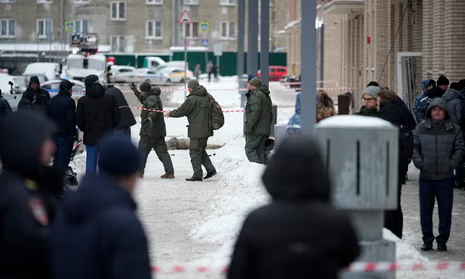
Kirillov’s assassination may serve as a reminder of the severe consequences for individuals who orchestrate crimes of this nature.
While Ukraine has openly claimed responsibility for the attack, Russia has yet to issue an official response. Analysts predict that this event could lead to intensified efforts by Russia to secure its borders and root out individuals they suspect of collaborating with Ukrainian operatives.
In summary, the killing of Igor Kirillov represents a significant development in the ongoing conflict between Russia and Ukraine. It highlights the lengths Ukraine is willing to go to hold Russian officials accountable for their actions while raising broader questions about the use of chemical weapons in warfare and the global effort to prevent such atrocities. As the situation unfolds, this event is likely to have far-reaching implications for the conflict and international relations at large.