

Donald Trump has asserted that the sharp rise in autism diagnoses in the United States stems from the widespread use of Tylenol, particularly during pregnancy. Trump announced that he and Robert F. Kennedy Jr., who now holds the position of Health Secretary, would discuss what they describe as “the cause” of autism. The announcement was originally teased during a memorial for Charlie Kirk, with further details promised in a press conference scheduled for 4 p.m. on September 22.
Courtroom speculation about the content of the announcement included early reports that this cause might be linked to Painkillers like Tylenol — a claim that has already sparked controversy. Ahead of the official statement, the White House press secretary, Karoline Leavitt, urged the public to listen with an open mind and refrain from premature judgment.
Speaking at the memorial service, Trump described the upcoming announcement as potentially “the biggest medical announcement in the history of the country,” saying that an answer to autism was forthcoming — further raising public expectations. When the moment came, he claimed that what was once believed to be about one child in every 10,000 having autism has grown in some areas to as much as one in 31.
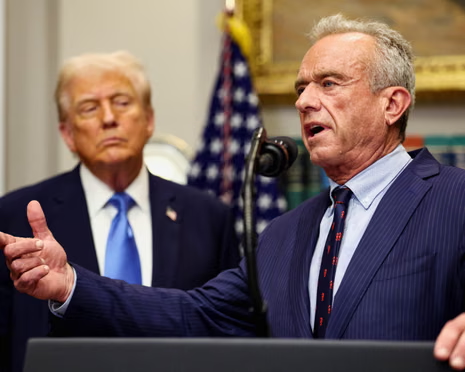
Trump attributed part of this increase to acetaminophen, the active component of Tylenol, stating that the U.S. Food and Drug Administration (FDA) is now strongly recommending that pregnant women limit their use of Tylenol unless absolutely necessary. He went further by saying that, personally, he believes pregnant women should avoid it altogether throughout pregnancy, and that children should not be given Tylenol. He said this applies throughout gestation, and in relation to children after birth.
Tylenol, for its part, issued a statement rejecting these claims. The company maintained that independent scientific evidence does not support the idea that acetaminophen causes autism. They strongly disagreed with any suggestions to the contrary and expressed concern about any risk posed to expectant mothers through such allegations.
Autism, often regarded as a lifelong neurodevelopmental divergence, affects how people think, feel, communicate, and interact with the world. Autistic individuals may experience social situations differently, find loud or busy spaces overwhelming, and sometimes adopt routines, repeated behaviors, or special interests. For some, masking behavior — trying to adapt in social situations — can lead to mental health difficulties.
Tylenol is commonly used in the United States to alleviate pain or reduce fever; its main ingredient, acetaminophen, is known in other places like the UK as paracetamol. It is widely available, over-the-counter, and generally considered safe when used according to guidelines. However, concerns raised by Trump and others suggest that the risks in pregnancy may have been undervalued.
Public health officials, scientists, and many medical professionals are likely to scrutinize these claims strongly. Trump’s suggestion that Tylenol is a cause of autism places heavy emphasis on correlational evidence that must be rigorously tested.
It is not yet clear what research, if any, he has cited or what consensus has been reached within the scientific community to back this assertion. The FDA’s stance, as relayed by Trump, is that caution is warranted — that Tylenol should be limited unless medically necessary — but there has been pushback from critics demanding peer-reviewed studies and strong methodological support.
Tylenol’s response insists that scientifically reliable studies have found no causal link between acetaminophen and autism. The company has raised concerns about misinformation, particularly when it may influence pregnant women to avoid a medicine they might believe to be risky based on insufficient evidence. Health policy experts may now face pressure to investigate the matter more deeply, review existing data, and possibly recommend more formal guidance depending on the strength of available evidence.
Some see this announcement as political theater: making a bold medical claim can draw attention, create a narrative around vulnerability in pregnancy, and tie into broader debates about regulatory oversight, pharmaceutical safety, and public trust. Others hope it could spark deeper research into environmental, chemical, and other influences on autism risk. Whether any new studies will conclusively show Tylenol as a contributing cause remains unknown at this point.

The announcement also raised questions about how risk is communicated to the public — when does caution become alarm? What level of evidence is needed before advising pregnant people to avoid a common medication? And how do officials balance possible harms with the benefits of treating pain or fever safely? There’s concern over the potential for unintended consequences if people avoid all use of Tylenol when it might truly be needed, for example to reduce high fever during pregnancy, which itself can be harmful.
What emerges clearly is that Trump’s assertion has intensified public attention on autism rates, what factors might contribute to them, and what role government agencies should play in researching, validating, and possibly regulating over-the-counter medications.
As the story unfolds, people will be watching to see not only what data is presented, but how medical experts, scientists, and regulators respond — whether by validating, refuting, or refining the claims made. The controversy is likely just beginning, and it will depend on rigorous evidence, transparent communication, and careful examination of risk versus benefit before any definitive conclusions are drawn.
