

Amanda Seyfried has found herself at the center of a heated debate following comments she made about the death of conservative commentator Charlie Kirk. Her remarks, which were posted and shared on social media in the days after the incident, drew both backlash and misunderstanding. In the days that followed, she attempted to clarify her intentions, emphasizing that while she strongly opposed Kirk’s political rhetoric, she did not condone violence in any form and was horrified by the way his life ended.
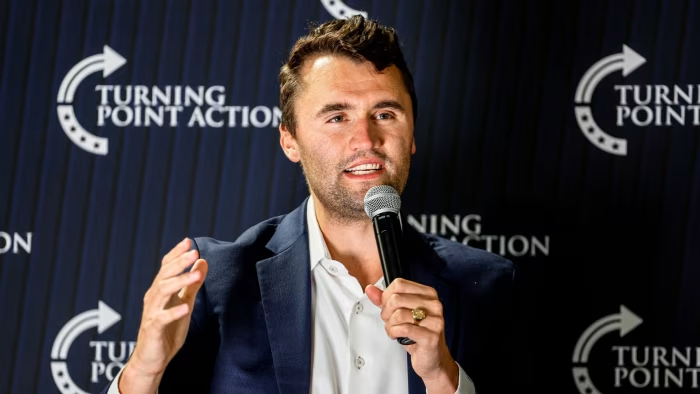
The tragedy unfolded on September 10 during a Turning Point USA event, where Kirk, who was speaking publicly, was fatally shot. The shocking attack made headlines across the country, leaving many stunned. Just two days later, police identified and arrested 22-year-old Tyler Robinson in Utah.
Robinson was charged with several serious crimes, including aggravated murder and witness tampering. The arrest provided some closure in terms of law enforcement response, but the incident continued to stir intense emotions across the political spectrum.Not long after the news of Kirk’s death broke, Seyfried entered the discussion through her social media presence.

Responding to a post that referenced Kirk’s stances on abortion, immigration, and LGBTQIA+ rights—issues where he was known for his deeply conservative and often polarizing views—she offered a blunt assessment: “He was hateful.” In addition, she reposted another message, one that many online observers connected to the violent circumstances of Kirk’s death. That post read: “You can’t invite violence to the dinner table and be shocked when it starts eating.”
For many, these comments appeared insensitive, especially coming so soon after Kirk’s killing. Critics argued that Seyfried was conflating her disagreement with his politics with a justification or rationalization for his death. The backlash spread quickly, with people accusing the actress of celebrating or minimizing a tragedy.
Faced with this wave of criticism, Seyfried decided to clarify her position. Through Instagram, she posted a longer and more carefully worded statement. She began by acknowledging that her words had been misunderstood, saying they had been “irresponsibly (but understandably) misinterpreted.” She explained that her intention had not been to add to the hostility that already surrounded the conversation, but to express her views on the importance of dialogue and the need for honesty in public discourse.
Seyfried urged people to embrace what she called “spirited discourse,” insisting that conversations about divisive topics should not automatically devolve into accusations and hostility. She spoke about the importance of nuance in humanity, making it clear that one could both condemn hateful rhetoric and also recognize the horror of a violent killing.
In her words, it was possible to be outraged by misogyny, racism, or discriminatory speech while still believing that Kirk’s murder was “absolutely disturbing and deplorable in every way imaginable.”The actress went further by stressing empathy for those affected by the shooting. She emphasized that no individual, regardless of political affiliation or ideology, should ever experience that kind of violence.
Seyfried reflected on the wider problem of gun violence in the United States, observing that the nation is plagued by senseless shootings that devastate families and communities. She closed her statement by suggesting that if nothing else, Americans should be able to agree that the cycle of violence must stop.
Seyfried was not the only public figure caught in controversy after Kirk’s death. Actor Michael Keaton also made comments that drew attention. Keaton pointed out what he saw as the “irony” of Kirk being killed with a gun, given Kirk’s previous opposition to stricter gun control.
At the same time, Keaton acknowledged that Kirk had a wife and two children and emphasized that those left behind were facing unbearable loss. He underscored that violence never solves disagreements, urging people to remember the human cost of political violence.
Another figure who faced scrutiny was Ava Raine, the daughter of wrestling legend and actor Dwayne Johnson. Raine shared a post online that some interpreted as a response to Kirk’s death. Like Seyfried, her comments were picked apart and debated, leading to further controversy about how public figures should respond in the immediate aftermath of such tragedies.
For Seyfried, the situation became a lesson in how easily words can be misinterpreted, particularly in the fast-moving and emotionally charged environment of social media. Her initial remarks were short, blunt, and without context, leaving them open to interpretations she did not intend.
Her clarification attempted to set the record straight, presenting a more balanced perspective that condemned Kirk’s rhetoric while also showing compassion for the fact that a man had been killed in front of an audience, leaving behind grieving family members.
Ultimately, Seyfried’s follow-up message highlighted her desire for a more thoughtful kind of public conversation. She made clear that she wanted to avoid division and misunderstanding, preferring to focus on honesty and empathy, even when strong disagreements exist. Her words carried a reminder that it is possible to oppose someone’s views fiercely without endorsing or excusing acts of violence against them.
