

In December 2024, a crime unfolded in the heart of New York City that shocked both the business world and the wider public. Brian Thompson, the CEO of UnitedHealthcare, one of the largest healthcare corporations in the United States, was fatally shot outside a Manhattan hotel.
The incident immediately drew intense media attention, not only because of the high-profile status of the victim, but also because of the questions it raised about motive, security, and the rising concerns about politically or ideologically motivated violence in the country.
Within days of the killing, law enforcement officials moved swiftly in their investigation. The FBI, working closely with local authorities, tracked down 27-year-old Luigi Mangione in Pennsylvania. His arrest took place at a McDonald’s, a detail that highlighted the sudden and almost surreal nature of the capture.

Prosecutors quickly leveled heavy charges against him, both at the state and federal level. At the state level, Mangione was indicted on 11 counts, including second-degree murder and murder as a crime of terrorism. Federally, prosecutors prepared a parallel case that raised the possibility of the death penalty, showing how seriously they considered the matter.
From the start, Mangione pleaded not guilty to all accusations. His defense team has consistently argued that the case against him is flawed, raising issues around the charges themselves and even pointing to constitutional protections.
One of their key points was that some of the terrorism charges were improperly applied. This became a central focus of a recent ruling by Judge Gregory Carro. After reviewing the arguments, Judge Carro dismissed two of the terrorism-related charges against Mangione.
The reasoning behind this dismissal is rooted in the specifics of New York state law. According to the state’s legal definitions, terrorism is generally defined as actions intended to intimidate or coerce a civilian population or influence government policy, typically involving multiple victims or broader public harm.
The judge concluded that applying terrorism charges to the killing of a single individual did not meet the necessary legal standard. While the crime was undeniably violent and tragic, the framework of the law simply did not support the idea that it constituted terrorism in this context.
Despite this significant dismissal, Mangione’s legal troubles are far from over. He still faces the most serious charge of all: second-degree murder. Other counts remain in place as well, ensuring that the case will continue to move forward.
The judge also rejected the defense’s attempt to have the case thrown out under double jeopardy claims, which argued that Mangione was essentially being tried for the same crime more than once. Judge Carro made it clear that these claims did not hold up under scrutiny.
For prosecutors, the setback of losing the terrorism charges may complicate their narrative, but it does not diminish the weight of the remaining accusations. The killing of Brian Thompson has already been framed as not only a personal tragedy but also a symbolic act, especially given Thompson’s role at the helm of a healthcare giant. Federal prosecutors, meanwhile, are still weighing whether to pursue the death penalty.
That decision is expected to take more time, but it remains a looming possibility that could shape the trajectory of the case in dramatic ways.The case also fits into a larger national conversation about politically motivated violence. Recent high-profile attacks have left Americans on edge about the risk of ideologically inspired crimes targeting individuals in positions of influence.
The Thompson case, although legally distinct, is often mentioned alongside these broader incidents because of the questions it raises about motive and message. Authorities have not disclosed the full details of Mangione’s alleged reasons for targeting Thompson, but they have acknowledged that they are examining the potential for ideological motivations.
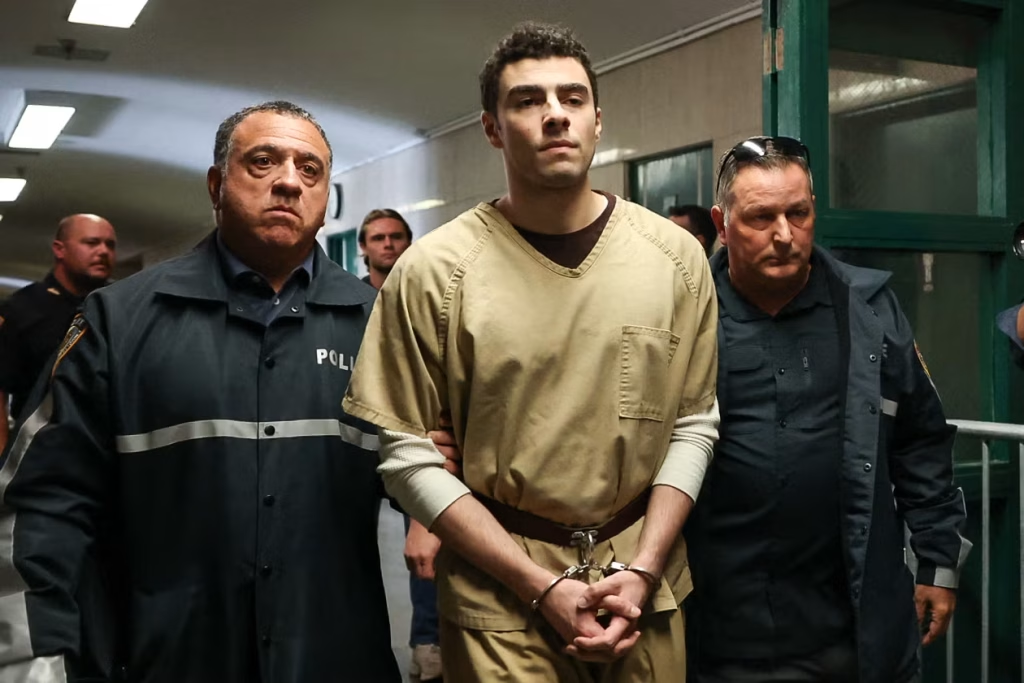
For Thompson’s family, colleagues, and the healthcare industry, the ongoing legal developments cannot erase the shock of his death. Thompson was regarded as a prominent figure in the corporate world, steering UnitedHealthcare through a period of major growth and expansion. His murder outside a hotel in Manhattan underscored how vulnerable even the most high-profile and protected executives can be in today’s climate.
The next steps in the case are already on the calendar. Hearings are set for December 1, though no formal trial date has been established yet. Legal experts suggest the process could drag on for months, or even years, especially with the possibility of federal death penalty considerations. In the meantime, the public is left to watch as the justice system works through the complex questions posed by this case.
Ultimately, the story of Luigi Mangione’s prosecution reflects not only the tragedy of a single violent act but also the challenges of applying terrorism laws, balancing state and federal jurisdiction, and determining appropriate punishments for crimes that strike at the heart of public life. While Judge Carro’s ruling narrowed the scope of the charges, the case continues to hold national significance, both for what it reveals about the limits of the law and for what it represents in a society grappling with the specter of politically tinged violence.
