

Donald Trump is preparing to arrive in the United Kingdom for a highly anticipated state visit, but controversy is already unfolding before his plane has even touched down. The invitation came months earlier, when Prime Minister Sir Keir Starmer, during his first official trip to the White House under Trump’s presidency, extended an offer on behalf of King Charles III for what was described as a historic and unprecedented second state visit. Trump called the invitation a great honor, confirming that he and First Lady Melania Trump would travel together for the occasion.
The former president’s first UK state visit six years ago had sparked massive protests, with crowds across the country making clear their disapproval of him and his politics. This time, British activists appear equally determined to express their dissent, though their methods are taking on a more creative and provocative tone. Even before Trump’s arrival, critics have planted satirical merchandise in high-profile locations, most notably the Windsor Castle gift shop.
One viral video circulating online showed mugs bearing an image of Trump alongside the late financier and convicted sex offender Jeffrey Epstein. The products, styled as if they were legitimate keepsakes, were described by the activist behind the stunt as part of a wider effort to highlight public anger and make Trump’s trip as uncomfortable as possible.

The clip spread quickly, with captions mocking the pairing of Trump and Epstein’s likenesses on items being sold in such an iconic British location. Plates featuring the same photograph from the 1990s, adorned with royal-style decorations, also surfaced in different shops.
Although the items were never officially part of the Windsor Castle collection, their sudden appearance caused a stir. A spokesperson for the Royal Collection Trust declined to comment on matters related to security, but social media users reported that the merchandise had been removed.
The use of the Trump-Epstein connection is particularly potent given the renewed public scrutiny of the Epstein case. Earlier this year, the Trump administration faced criticism for appearing to reverse its earlier promise to release all FBI files connected to Epstein, a decision that triggered fresh waves of speculation and suspicion.
Adding to the controversy, Democratic members of the Oversight Committee recently published what they claimed was a handwritten note from Trump to Epstein for his 50th birthday. The image, allegedly from Epstein’s personal “birthday book,” was shared online with the assertion that Trump referred to a “wonderful secret” the two supposedly shared. Democrats used the alleged letter to demand full disclosure of the sealed files, suggesting the note was further proof of undisclosed ties.
Trump, however, has forcefully denied any involvement, dismissing the alleged note as a fabrication. Speaking to reporters, he insisted that the handwriting and style were not his, saying it was not his signature and not the way he communicates. He argued that those familiar with him would recognize the language as inconsistent with his usual manner of speaking. Calling the claims nonsense, he reiterated that attempts to link him personally to Epstein beyond their public interactions were baseless.
Despite his dismissal of the allegations, the controversy underscores why protestors in Britain are seizing on the association to embarrass him. For many, the Epstein scandal remains a symbol of abuse of power and secrecy among elites, and pairing Trump with Epstein’s image is seen as an effective way to convey dissent. By placing these items in royal-adjacent spaces, activists are drawing attention not only to Trump’s presence but also to questions of accountability that continue to dog him internationally.
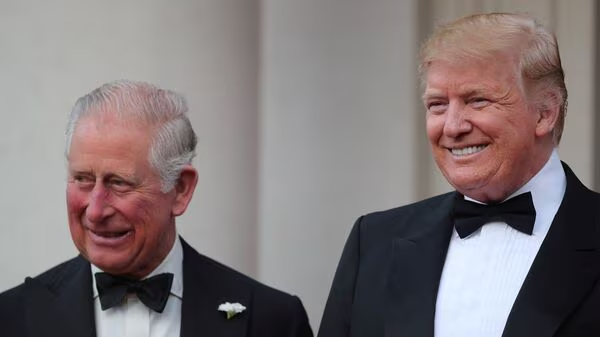
As Trump’s state visit unfolds, the political and social divide surrounding him is once again becoming impossible to ignore. For supporters, the trip represents a chance to solidify ties between the US and the UK under a renewed spirit of cooperation.
For critics, it is an opportunity to amplify opposition and ensure that his presence is met with visible resistance. The creativity of the protest tactics suggests that many are eager to go beyond traditional marches and rallies, instead using satire and symbolism to make their voices heard.
Ultimately, Trump’s visit is unlikely to escape controversy. Whether through mock merchandise or renewed debates over old associations, his presence on British soil continues to spark strong feelings. For those staging the protests, the message is clear: they intend to remind both Trump and the watching world that his legacy and connections remain under scrutiny, no matter how grand the ceremonial welcome may be.
