

In November 2022, the quiet college town of Moscow, Idaho was shaken to its core after the brutal killings of four University of Idaho students. Kaylee Goncalves, Madison Mogen, Xana Kernodle, and Ethan Chapin were found stabbed to death inside their off-campus rental home.
The case drew nationwide attention, not only because of the shocking nature of the crime but also due to the months of speculation before an arrest was made. Eventually, investigators focused on Bryan Kohberger, a criminology PhD student, who became the central suspect.
After a lengthy legal process, Kohberger entered a guilty plea in July. He admitted to four counts of first-degree murder as well as burglary. The plea deal meant he avoided the death penalty, but he was sentenced to spend the rest of his life behind bars without the possibility of parole or appeal. His punishment consists of four consecutive life sentences, effectively ensuring that he will never leave prison.

Currently, he is held at Idaho Maximum Security Institution in Kuna. Reports indicate that since being incarcerated, Kohberger has complained about the treatment he receives from other inmates, even claiming he has been the target of sexual harassment, leading him to request a transfer to another facility.
Although his plea brought some legal closure, there are still unanswered questions surrounding the case. One of the most haunting aspects is the lack of a clear motive. Despite admitting guilt, Kohberger has never explained why he carried out such a brutal crime.
For the families of the victims, as well as the public, that silence has left a lingering sense of mystery and frustration. Investigators and court documents have provided details about his movements and behavior leading up to the murders, but the “why” remains unanswered.
In the wake of his arrest, authorities began piecing together not only the physical evidence but also his digital footprint. Forensic analysts from the tech company Cellebrite examined Kohberger’s phone records, uncovering a series of conversations he had with his mother, Maryann, in the days after the killings. What they found was deeply unsettling.
On November 17, 2022, just days after the four students were killed, Kohberger spoke to his mother on the phone for several hours. During that time, she sent him a link to a news article. The article in question detailed the discovery of bruises on Xana Kernodle’s body, noting that she appeared to have fought back fiercely against her attacker. This message, coming from his own mother, carries a disturbing weight when viewed in hindsight, given that her son was responsible for the attack.
The following morning, after what seemed to have been a long and intense discussion about the murders, Maryann’s texts suddenly shifted in tone. Instead of continuing the heavy conversation, she wrote about something entirely mundane: she described a girl at a local coffee shop who had been especially kind to elderly customers.
To forensic analysts reviewing the exchange, the abrupt change of subject seemed bizarre. Jared Barnhart, one of the Cellebrite experts, commented that the switch “makes no sense,” adding that “there’s just no context between talking about the murders the night before and then this thing the next morning.”
This contrast—between the horrific and the ordinary—paints a peculiar picture of how the Kohberger family was processing events at the time. On one hand, there was a direct acknowledgment of the crime through sharing a news article about one of the victims’ injuries.
On the other, there was almost an intentional redirection to something harmless and forgettable, as though to divert attention away from the darker subject. Whether this was an act of denial, a coping mechanism, or simply coincidence is something only Maryann herself could explain.
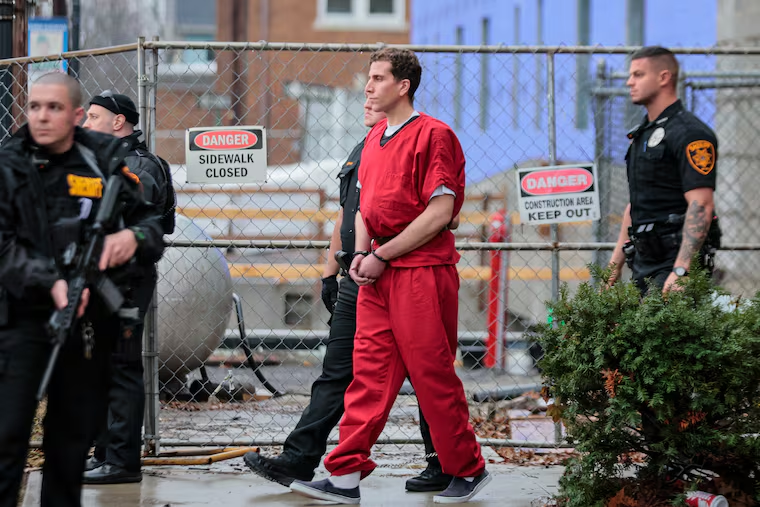
The revelation of these text messages has added another layer to the disturbing narrative. For many, it underscores the painful truth that while the victims’ families were enduring unimaginable grief, Kohberger and his family were communicating in ways that, at least outwardly, seemed almost detached from the gravity of the murders. At the same time, it raises questions about what Maryann may have suspected about her son, if anything at all, and how she was attempting to navigate the reality of what had happened.
Nearly three years on, the Kohberger case continues to attract public fascination. The brutality of the crime, the lack of motive, and the eerie details that emerge from investigations all contribute to the sense that there are still missing pieces to the story. For the families of Kaylee, Madison, Xana, and Ethan, the legal outcome provided some measure of accountability, but the emotional void left by their loss is something that no court sentence can repair.
The texts between Kohberger and his mother are just one fragment of a much larger puzzle. They serve as a reminder that behind every headline and courtroom update are human relationships—messy, complicated, and often contradictory. In this case, they reveal a disturbing juxtaposition between the horror of a crime that shocked the nation and the everyday exchanges of a family struggling to process it.
