

A once strong and mutually beneficial relationship between Elon Musk and former U.S. President Donald Trump has taken a sharp and surprising turn. After a wave of provocative comments and controversial allegations from Musk, the Tesla and SpaceX CEO has issued a rare public apology—attempting to mend fences with the very man he recently criticized in a highly publicized online spat.
Musk and Trump, once considered close political and business allies, had often appeared together at campaign events and high-profile public functions. Their relationship was more than symbolic—Trump had even given Musk a brief advisory role in his administration, entrusting him to lead the Department of Government Efficiency, colloquially known as “DOGE.” This role underscored Trump’s trust in Musk’s vision of streamlining bloated bureaucracies and promoting innovation.
But tensions flared dramatically when Trump introduced a sweeping new economic proposal, known as the “One Big Beautiful Bill Act.” Musk was quick to condemn the bill, calling it a “disgusting abomination.” He claimed it represented everything he opposed about outdated government financial models—alleging it threatened fiscal responsibility and economic innovation. But his criticism didn’t stop there.

Taking to X (formerly Twitter), Musk went far beyond typical political commentary. In a post that stunned even his supporters, Musk alleged that Trump’s political rise in 2024 was largely due to Musk’s own behind-the-scenes influence. He went a step further, asserting that Trump was named in Jeffrey Epstein’s infamous files—a topic long steeped in speculation and secrecy. “Time to drop the really big bomb: @realDonaldTrump is in the Epstein files. That is the real reason they have not been made public,” Musk wrote, adding a pointed farewell: “Have a nice day, DJT!” The post was later deleted, but not before it was widely shared and documented by media outlets.
Unsurprisingly, Trump fired back. On his Truth Social platform, the former president dismissed Musk’s accusations and painted the billionaire as someone who had gone too far. He claimed Musk had lost sight of their shared goals and said he had revoked Musk’s involvement with government-led electric vehicle initiatives. Trump’s Press Secretary, Karoline Leavitt, labeled Musk’s comments “unfortunate” and reiterated the administration’s strong backing of the One Big Beautiful Bill Act.
According to Trump, Musk had become erratic. He remarked that the billionaire had “gone crazy,” adding that Musk’s behavior had prompted him to remove him from the DOGE position.
The controversy quickly escalated, drawing widespread media attention and prompting official responses from government insiders. The White House also weighed in, expressing disapproval over Musk’s unverified accusations and reinforcing their trust in the president’s version of events. Leavitt again appeared in public interviews, suggesting that Musk had pressured the administration for policies that didn’t align with Trump’s national agenda.
Speaking during a media availability aboard Air Force One, Trump was firm in his decision to sever ties with Musk. Still, he concluded his remarks with a diplomatic tone, stating that he wished Musk well but was not interested in renewing their association.
Many were quick to point out that Musk’s most serious allegation—the claim that Trump was named in the sealed Epstein files—was made without any evidence. Legal experts and fact-checkers noted that no public documentation or verified records support Musk’s assertion. Trump’s legal team swiftly responded, dismissing the claim as old news. They cited past statements from Epstein’s own lawyer asserting that Trump had no connection to the criminal activity that surrounded Epstein’s case.
In the days following the outburst, Musk appeared to soften his stance. He began walking back some of his more inflammatory comments, even refraining from posting additional criticisms. Instead, he reposted content that complimented the Trump administration’s handling of domestic unrest in Los Angeles.
Then, on June 11, Musk made a surprising statement. “I regret some of my posts about President @realDonaldTrump last week. They went too far,” he tweeted. While the message was vague and didn’t address which claims he regretted, it was perceived by many as an olive branch.
According to reports, Musk privately reached out to Trump on June 10, the day before his public apology. While the contents of the call haven’t been disclosed, insiders suggest the conversation helped ease tensions between the two powerful figures. Trump later commented that Musk’s apology was “very nice,” although he stopped short of suggesting their relationship would be repaired.
Despite the apology, Trump has yet to formally respond on Truth Social, and as of now, their future relationship remains uncertain. Earlier interviews suggest Trump is not keen on reconciliation, having already expressed that he would not be seeking to restore their partnership.
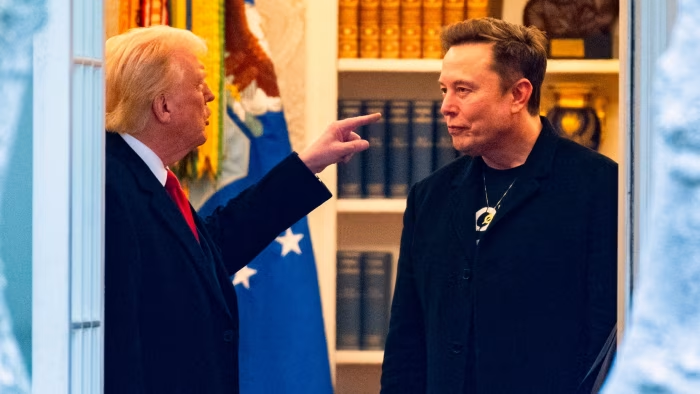
Though Musk’s regretful tone has cooled the feud, it remains unclear if either party truly trusts the other. Trump’s response has been polite but notably distant. His lack of commitment to reconciliation indicates that their once-close alliance may be permanently fractured.
This episode offers more than just political drama—it exposes the fragility of modern alliances formed in the digital age. With social media providing an unfiltered outlet for impulsive declarations, even relationships between powerful figures like Trump and Musk can unravel overnight. Musk’s role as a tech titan and cultural influencer means his words don’t just make headlines—they shape markets, politics, and public discourse.
Now, with trust frayed and reputations on the line, both men will likely tread more carefully in the future—though with figures as unpredictable as Musk and Trump, nothing is ever certain.
